

Smart Wearables Can See and Hear Everything: Why RF Jammers Are Gaining Consumer Attention
- usniniasen
Smart wearables were once simple fitness trackers. Today, they are something entirely different. AR glasses record video. VR headsets capture spatial movement. Smart earbuds listen continuously. Wrist devices monitor location, biometrics, and surrounding signals. Together, they form a dense personal sensing network-always on, always collecting.
As AR and VR devices move rapidly from gaming into workplaces, classrooms, and public spaces, a critical question is emerging: how much of our environment is being recorded without our awareness?
This concern is driving a noticeable shift in consumer behavior-and with it, rising interest in signal jammer as a personal privacy defense tool.
AR/VR Wearables: Immersive Tech, Invisible Surveillance
Modern wearable devices rely heavily on radio-frequency communication:
- Bluetooth for peripheral connections
- WiFi for cloud synchronization
- Cellular modules for standalone operation
- RF beacons for spatial mapping
- Broadcast frequencies for real-time data transmission
To function properly, these devices often capture:
- Ambient audio
- Video of surrounding people
- Indoor and outdoor location data
- Environmental RF signatures
While manufacturers emphasize "context awareness" and "immersive experience," critics argue this creates a continuous environmental recording loop-often without clear consent from bystanders.
Why Consumers Are Becoming Concerned
Several trends are converging:
- Always-On Sensors Many wearables do not clearly indicate when microphones or cameras are active.
- Cloud Dependency Captured data is frequently uploaded, analyzed, and stored remotely.
- Workplace Adoption of AR Devices Smart glasses are now used in logistics, healthcare, and manufacturing-introducing new risks of unintentional data leakage.
- Unclear Third-Party Access Developers, advertisers, and analytics platforms may all interact with collected data.
For privacy-conscious consumers, this creates a sense of constant exposure.
RF Jammers Enter the Conversation
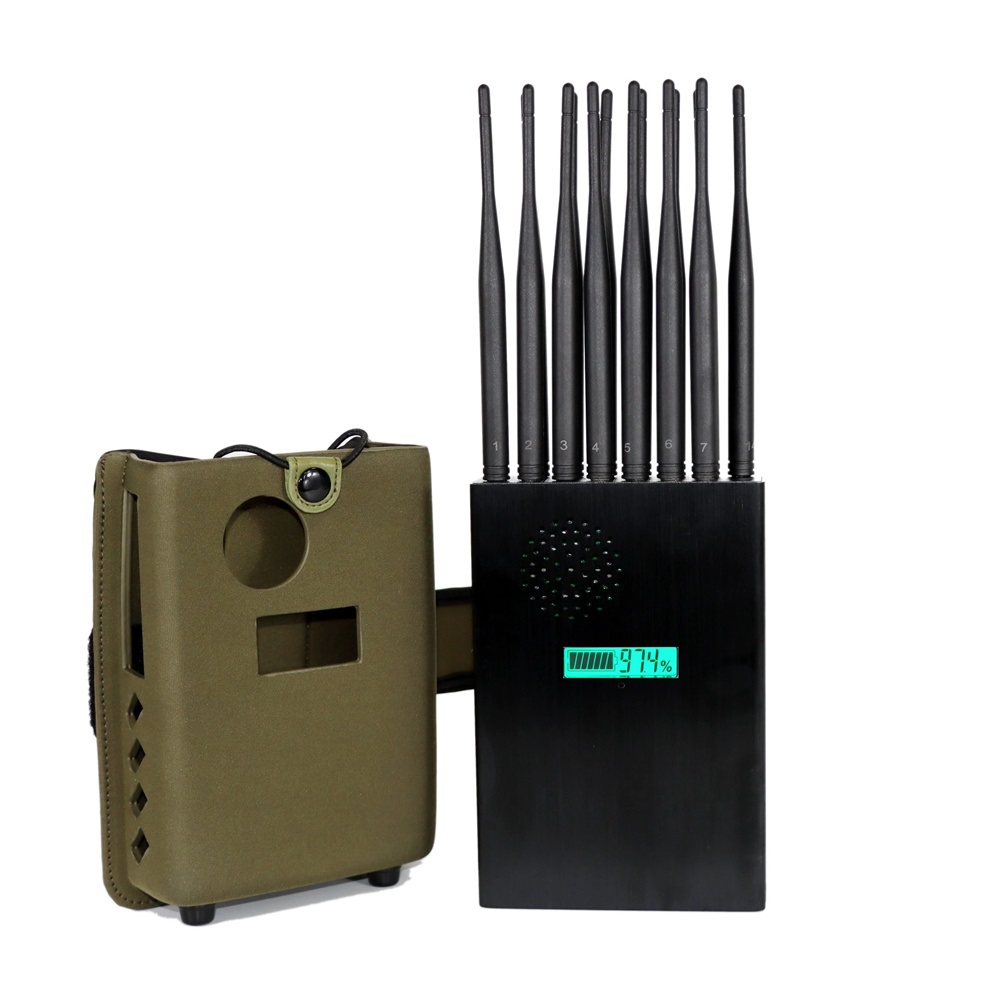
In response, some users are exploring Cell Phone jammers-not as offensive tools, but as local privacy shields.
An RF jammer works by disrupting specific radio frequencies within a limited range, preventing devices from transmitting or receiving data wirelessly. In environments where sensitive conversations or activities occur, this can effectively reduce unintended data leaks.
Commonly targeted bands include:
- Bluetooth
- WiFi
- ISM bands
- Certain broadcast frequencies
This makes Wireless Signal Jammer particularly relevant in spaces where AR/VR wearables are present.
Why Interest Is Growing Now
Unlike smartphones, wearables often lack intuitive privacy controls. Consumers cannot easily verify what is being transmitted-or when.
RF jammers offer:
- Immediate signal isolation
- Device-agnostic protection
- No dependency on software settings
As a result, they are increasingly viewed as a hardware-based privacy layer.
From Niche Tool to Consumer Awareness
What was once associated mainly with security professionals is now discussed in consumer privacy forums. High-quality GPS shielding devices, such as those developed by jammermfg.com, are designed with stability, portability, and targeted frequency control in mind.
The shift is clear: Privacy protection is no longer just about apps and permissions-it's about controlling the invisible radio environment around us.
Conclusion
Smart wearables promise convenience and immersion, but they also introduce unprecedented levels of ambient data collection. As AR and VR devices continue to blend digital and physical realities, consumers are reassessing how much exposure they are willing to accept.
In this evolving landscape, RF jammers are gaining attention-not as extreme measures, but as practical tools for reclaiming control over personal space in a wireless world.