

Why Lithium Forklifts Outperform Lead-Acid Models
In today's fast-paced logistics and warehousing environments, efficiency and reliability are critical. Forklifts are the backbone of material handling, and the type of battery they use can significantly impact productivity, operating costs, and uptime. More and more businesses are making the switch from traditional lead-acid forklift batteries to advanced lithium-ion technology. But why? Let's explore why lithium forklifts consistently outperform their lead-acid counterparts.
Faster Charging, Less Downtime
One of the most significant advantages of lithium forklift batteries is their rapid charging capability. Unlike lead-acid batteries, which often require 8 hours to charge and another 8 hours to cool down, lithium-ion batteries can fully charge in just 1 to 2 hours. This fast charging supports opportunity charging—meaning workers can recharge during breaks without affecting battery life.
Reduced charging time means reduced downtime, which translates directly into increased operational efficiency. This is especially critical in high-demand industries like logistics, distribution, and manufacturing, where forklifts are expected to run multiple shifts.
Longer Battery Life and Higher Performance
Lithium forklift batteries typically offer a lifespan of 3,000 to 5,000 charge cycles, far outlasting the 1,000 to 1,500 cycles common in lead-acid batteries. Over time, this longevity reduces replacement costs and increases return on investment.
Additionally, lithium batteries provide consistent power output, even when the battery charge is low. Lead-acid batteries tend to lose performance as their charge depletes, resulting in slower lift speeds and reduced productivity. With lithium-powered forklifts, operators experience stable performance from start to finish.
Maintenance-Free Operation
Lead-acid batteries require regular maintenance, including watering, equalizing charges, and ventilation. These tasks not only consume time and labor but also introduce risks such as acid spills and toxic fumes. In contrast, forklift lithium battery is completely sealed and require no ongoing maintenance, improving safety and reducing labor costs.
Eliminating maintenance allows warehouse teams to focus on operations instead of battery upkeep, further streamlining workflow and reducing the total cost of ownership.
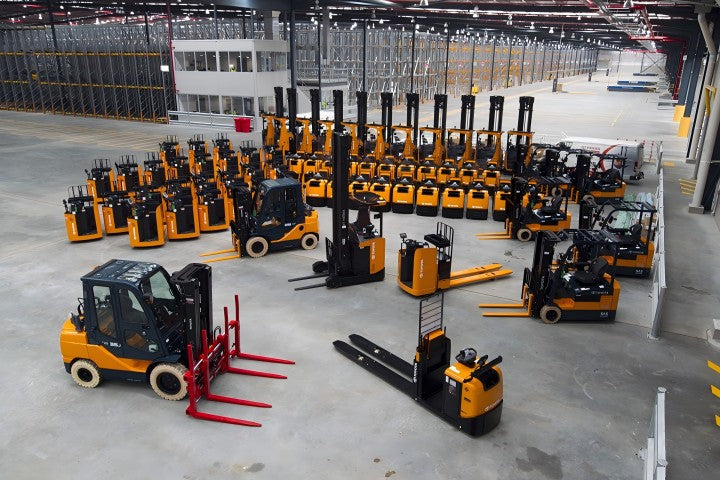
Space and Energy Efficiency
Because lithium batteries charge quickly and support opportunity charging, they eliminate the need for dedicated battery rooms or multiple spare batteries. This frees up valuable warehouse space and simplifies battery management.
Additionally, lithium-ion technology is more energy-efficient, converting a higher percentage of electricity into usable power. This contributes to reduced energy bills and a lower environmental impact.
Improved Safety and Environmental Benefits
Safety is always a top priority in industrial settings. Lithium forklift batteries are equipped with advanced battery management systems (BMS) that monitor voltage, temperature, and charge levels in real-time. These systems prevent overcharging, overheating, and deep discharges—common causes of battery failure in lead-acid models.
Environmentally, lithium batteries are cleaner and more sustainable. They do not emit harmful gases during operation or charging, and their longer lifespan means fewer batteries are discarded over time. With proper recycling programs in place, lithium batteries support greener, more eco-conscious operations.
Cost Efficiency Over Time
While the upfront cost of a lithium forklift battery is higher than that of a lead-acid battery, the long-term savings are significant. Reduced maintenance, longer service life, fewer replacements, lower energy consumption, and improved uptime all contribute to a much lower total cost of ownership over the battery's lifespan.
For companies running multiple shifts or operating in 24/7 environments, the return on investment in lithium technology is often realized within just a few years.
Is It Time to Upgrade Your Forklift Fleet?
As more businesses prioritize operational efficiency, sustainability, and safety, lithium forklift batteries are quickly becoming the new standard in material handling. Whether you're managing a single warehouse or a nationwide logistics network, the advantages of lithium-ion power are clear: faster charging, longer life, lower maintenance, and greater overall performance.
Upgrading to lithium-powered forklifts is more than just a trend—it's a smart, future-ready investment for companies looking to stay competitive in a rapidly evolving market.
If you're considering switching from lead-acid to lithium forklift batteries, now is the time to explore your options and take advantage of the benefits that modern battery technology can bring to your operations.