

Drive characteristics and applications of integrated stepper motors
1. What is an integrated stepper motor?
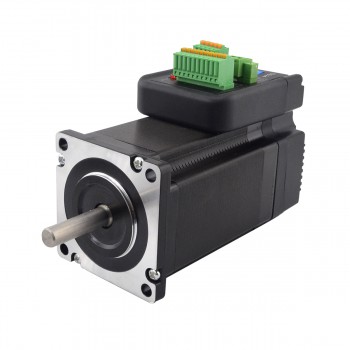
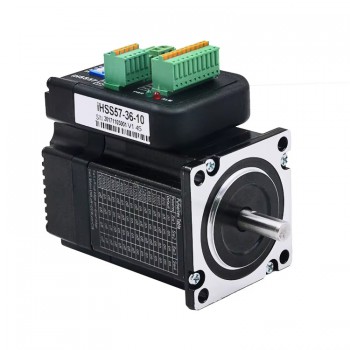
An integrated stepper motor is a stepper motor system that integrates the motor body and the driver. This design allows the motor to be directly connected to the control system through an interface, which simplifies the installation and debugging process and improves the overall performance and reliability of the system. The integrated design can reduce the resistance and inductance of the connection line, reduce signal interference, and thus improve the response speed and stability of the system.
2. Working principle of integrated stepper motors
The working principle of integrated stepper motors is based on the principle of electromagnetic induction, which realizes the conversion of angular displacement or linear displacement by controlling the electrical pulse signal. When pulse current is applied to the stator winding in a specific order, a rotating magnetic field is generated, which attracts the rotor to rotate step by step according to the step angle. For example, a two-phase stepper motor with a step angle of 1.8° rotates the rotor precisely 1.8° for each pulse received. By controlling the number of pulses, frequency and power-on sequence, precise position and speed control can be achieved.
3. Driving characteristics of integrated stepper motors
1. Highly integrated design: The integrated stepper motor integrates the stepper motor, encoder and driver into a whole, which greatly simplifies the system architecture and reduces the complexity and cost burden of installation and configuration. This design not only saves space, but also enhances the overall operating efficiency.
2. Support for multiple communication protocols: The integrated stepper motor supports multiple bus standard communication protocols, such as CANopen and RS485. These protocols provide high real-time performance, high reliability and strong scalability, allowing the motor to be quickly and easily integrated into various industrial automation systems, achieving seamless connection and efficient collaboration with other devices.
3. Multiple motion control modes: The integrated stepper motor not only supports basic motion control functions, but also provides multiple standard control modes such as analog control, position mode (PP), velocity mode (PV) and origin mode (HM). The support of these control modes enables the motor to adapt to a variety of application scenarios and provide more flexible and precise motion control solutions.
4. Compact structural design: The integrated drive stepper motor has a compact structural design, which greatly simplifies the installation process and reduces maintenance costs. Due to its compact structure design, it has significant advantages in space-constrained applications.
5. High reliability and precise control: By precisely controlling the frequency and number of pulse signals, precise positioning and speed regulation of the motor can be achieved. This high reliability and precise control feature makes integrated stepper motors widely used in automation equipment, precision instruments and other fields.
4. Main application industries of integrated stepper motors
1. Automation equipment: Integrated stepper motors are widely used in automation equipment, especially in automated production lines and robotics. They can be used in joint drives, end effectors and other parts to achieve high-precision and high-speed motion control.
2. Medical equipment: In the medical field, integrated stepper motors are used in surgical robots, rehabilitation equipment, etc. to improve the level and quality of medical services. In addition, they are also used for precise position control of equipment such as X-ray machines and CT scanners.
3. Packaging machinery: In packaging machinery, integrated stepper motors are used to control the precise movement of equipment such as conveyor belts, sealing machines, labeling machines, etc., to ensure the efficiency, accuracy and reliability of the packaging process.
4. Printing machinery: In printing machinery, integrated stepper motors are used to control the precise movement of key components such as printing rollers and ink volume adjustment to ensure the accuracy and stability of the printing process.
5. Textile machinery: In textile machinery, integrated stepper motors are used to control the precise movement of various textile equipment to improve production efficiency and product quality.
6. Education and scientific research: In the field of education and scientific research, integrated stepper motors are used in experimental teaching, model making and other scenarios to provide precise control and operation.
An integrated stepper motor is a stepper motor system that integrates the motor body and the driver. This design allows the motor to be directly connected to the control system through an interface, which simplifies the installation and debugging process and improves the overall performance and reliability of the system. The integrated design can reduce the resistance and inductance of the connection line, reduce signal interference, and thus improve the response speed and stability of the system.
2. Working principle of integrated stepper motors
The working principle of integrated stepper motors is based on the principle of electromagnetic induction, which realizes the conversion of angular displacement or linear displacement by controlling the electrical pulse signal. When pulse current is applied to the stator winding in a specific order, a rotating magnetic field is generated, which attracts the rotor to rotate step by step according to the step angle. For example, a two-phase stepper motor with a step angle of 1.8° rotates the rotor precisely 1.8° for each pulse received. By controlling the number of pulses, frequency and power-on sequence, precise position and speed control can be achieved.
3. Driving characteristics of integrated stepper motors
1. Highly integrated design: The integrated stepper motor integrates the stepper motor, encoder and driver into a whole, which greatly simplifies the system architecture and reduces the complexity and cost burden of installation and configuration. This design not only saves space, but also enhances the overall operating efficiency.
2. Support for multiple communication protocols: The integrated stepper motor supports multiple bus standard communication protocols, such as CANopen and RS485. These protocols provide high real-time performance, high reliability and strong scalability, allowing the motor to be quickly and easily integrated into various industrial automation systems, achieving seamless connection and efficient collaboration with other devices.
3. Multiple motion control modes: The integrated stepper motor not only supports basic motion control functions, but also provides multiple standard control modes such as analog control, position mode (PP), velocity mode (PV) and origin mode (HM). The support of these control modes enables the motor to adapt to a variety of application scenarios and provide more flexible and precise motion control solutions.
4. Compact structural design: The integrated drive stepper motor has a compact structural design, which greatly simplifies the installation process and reduces maintenance costs. Due to its compact structure design, it has significant advantages in space-constrained applications.
5. High reliability and precise control: By precisely controlling the frequency and number of pulse signals, precise positioning and speed regulation of the motor can be achieved. This high reliability and precise control feature makes integrated stepper motors widely used in automation equipment, precision instruments and other fields.
4. Main application industries of integrated stepper motors
1. Automation equipment: Integrated stepper motors are widely used in automation equipment, especially in automated production lines and robotics. They can be used in joint drives, end effectors and other parts to achieve high-precision and high-speed motion control.
2. Medical equipment: In the medical field, integrated stepper motors are used in surgical robots, rehabilitation equipment, etc. to improve the level and quality of medical services. In addition, they are also used for precise position control of equipment such as X-ray machines and CT scanners.
3. Packaging machinery: In packaging machinery, integrated stepper motors are used to control the precise movement of equipment such as conveyor belts, sealing machines, labeling machines, etc., to ensure the efficiency, accuracy and reliability of the packaging process.
4. Printing machinery: In printing machinery, integrated stepper motors are used to control the precise movement of key components such as printing rollers and ink volume adjustment to ensure the accuracy and stability of the printing process.
5. Textile machinery: In textile machinery, integrated stepper motors are used to control the precise movement of various textile equipment to improve production efficiency and product quality.
6. Education and scientific research: In the field of education and scientific research, integrated stepper motors are used in experimental teaching, model making and other scenarios to provide precise control and operation.