

Design principles and main applications of integrated servo motors
1.What is an integrated servo motor?
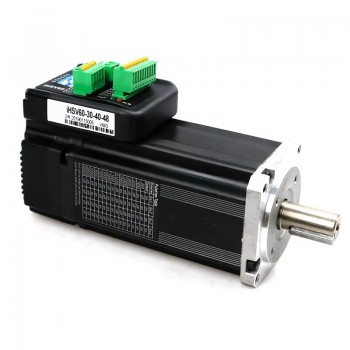
An integrated servo motor is a device that integrates a servo motor with a control system. This device usually includes the servo motor itself, a driver, a controller, and necessary connecting cables and interfaces to form a complete servo control system. The design of the integrated servo motor makes installation and maintenance more convenient, and also reduces the complexity of system wiring.
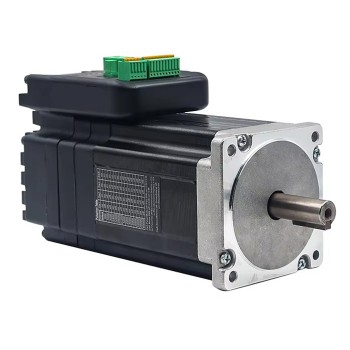
2.The structure of the integrated servo motor
1.Stator: The stator is mainly made of laminated silicon steel sheets and is used to fix the magnetic field of the motor. High-quality silicon steel sheets can effectively reduce eddy current loss and hysteresis loss. The stator is the stationary part of the motor. After the winding is energized, a rotating magnetic field is generated to provide a power source for the operation of the motor.
2.Rotor: The rotor is usually composed of permanent magnets or electromagnets and is the rotating part of the motor. In a permanent magnet servo motor, the rotor has a built-in permanent magnet and can generate a magnetic field without external power supply. The rotor begins to rotate under the action of the rotating magnetic field generated by the stator, converting electrical energy into mechanical energy to drive the load to operate.
3.Encoder: The encoder is used to monitor the position and speed of the motor in real time, and feed this information back to the control system to form a closed-loop control. Common encoders include photoelectric encoders and magnetic encoders, which are key components for achieving high-precision control of servo motors.
4.Bearings and end covers: Bearings are used to support the rotation of the rotor to reduce friction and wear; end covers are used to seal the inside of the motor to prevent dust and moisture from entering. These components together ensure the stable operation and long life of the motor.
3.Design principles of integrated servo motors
1.High density, high reliability, and high electromagnetic compatibility: This is the core issue of integrated servo motor design. During the design process, it is necessary to optimize the performance of the motor body, improve the power density, and consider the thermal structure design and electromagnetic interference suppression of the system.
2.Component selection: Selecting the right components is an important part of the design. For example, select fractional slot concentrated windings to improve power density; design small-sized, high-performance motion encoders; use self-developed single-chip servo controllers to enhance anti-interference capabilities.
3.Thermal structure design: Since the high power density of the integrated servo motor will lead to a higher temperature rise, it is necessary to study the temperature field distribution of the system and optimize the thermal design. This includes the design of the overall layout, shell geometry, potting materials and heat pipes.
4.Electromagnetic compatibility design: PWM technology improves system performance while also bringing electromagnetic interference. By analyzing the turn-off process of MOSFET, a closed-loop gate voltage control method is designed to suppress voltage overshoot and oscillation and improve EMI performance.
5.Precision control: The integrated servo motor is positioned by receiving pulses. Each time a pulse is received, it rotates a corresponding angle to form a closed-loop control, thereby achieving precise positioning with an accuracy of up to 0.001mm.
4.Main application areas of integrated servo motors
1.Robotics technology: Integrated servo motors play a vital role in robotics. They are used for joint drive, arm movement and complex motion control of robots, and can achieve high-precision motion control and improve the flexibility and accuracy of robots.
2.Industrial Automation: In the field of industrial automation, integrated servo motors are widely used in automation systems such as robots, conveyor belts, and assembly lines for precise control of movement. For example, in CNC machine tools, integrated servo motors control the movement of cutting tools to ensure processing accuracy and speed; in automated assembly lines and packaging systems, integrated servo motors provide precise position control and rapid response capabilities to improve production efficiency.
3.Medical Equipment: Integrated servo motors are also widely used in medical equipment, such as surgical robots, CT scanners, and X-ray machines. These devices require high-precision control to ensure the safety and accuracy of operation.
4.Aerospace: In the field of aerospace, integrated servo motors are used in control systems for aircraft, satellites, missiles, etc. They can meet the requirements of high speed, high precision, and high reliability to achieve stable and precise aerospace missions.
5.Automotive Industry: Integrated servo motors are used in the automotive industry to improve handling and safety performance. For example, integrated servo motors can be applied to automotive steering systems, brake systems, suspension systems, etc. to improve the handling and safety of automobiles.
6.New energy: Integrated servo motors also have important applications in the field of new energy. For example, in wind power generation equipment, integrated servo motors are used to accurately adjust the blade angle and speed to improve power generation efficiency; in solar tracking devices, integrated servo motors control the angle of solar panels to maximize the capture and utilization of renewable energy.
7.Other fields: Integrated servo motors are also used in precision instruments (such as microscopes, analytical instruments), household appliances (such as washing machines, air conditioners), gaming and entertainment equipment (such as game consoles), intelligent transportation systems (such as traffic lights, vehicle navigation), scientific research and experimental equipment and other fields.
An integrated servo motor is a device that integrates a servo motor with a control system. This device usually includes the servo motor itself, a driver, a controller, and necessary connecting cables and interfaces to form a complete servo control system. The design of the integrated servo motor makes installation and maintenance more convenient, and also reduces the complexity of system wiring.
2.The structure of the integrated servo motor
1.Stator: The stator is mainly made of laminated silicon steel sheets and is used to fix the magnetic field of the motor. High-quality silicon steel sheets can effectively reduce eddy current loss and hysteresis loss. The stator is the stationary part of the motor. After the winding is energized, a rotating magnetic field is generated to provide a power source for the operation of the motor.
2.Rotor: The rotor is usually composed of permanent magnets or electromagnets and is the rotating part of the motor. In a permanent magnet servo motor, the rotor has a built-in permanent magnet and can generate a magnetic field without external power supply. The rotor begins to rotate under the action of the rotating magnetic field generated by the stator, converting electrical energy into mechanical energy to drive the load to operate.
3.Encoder: The encoder is used to monitor the position and speed of the motor in real time, and feed this information back to the control system to form a closed-loop control. Common encoders include photoelectric encoders and magnetic encoders, which are key components for achieving high-precision control of servo motors.
4.Bearings and end covers: Bearings are used to support the rotation of the rotor to reduce friction and wear; end covers are used to seal the inside of the motor to prevent dust and moisture from entering. These components together ensure the stable operation and long life of the motor.
3.Design principles of integrated servo motors
1.High density, high reliability, and high electromagnetic compatibility: This is the core issue of integrated servo motor design. During the design process, it is necessary to optimize the performance of the motor body, improve the power density, and consider the thermal structure design and electromagnetic interference suppression of the system.
2.Component selection: Selecting the right components is an important part of the design. For example, select fractional slot concentrated windings to improve power density; design small-sized, high-performance motion encoders; use self-developed single-chip servo controllers to enhance anti-interference capabilities.
3.Thermal structure design: Since the high power density of the integrated servo motor will lead to a higher temperature rise, it is necessary to study the temperature field distribution of the system and optimize the thermal design. This includes the design of the overall layout, shell geometry, potting materials and heat pipes.
4.Electromagnetic compatibility design: PWM technology improves system performance while also bringing electromagnetic interference. By analyzing the turn-off process of MOSFET, a closed-loop gate voltage control method is designed to suppress voltage overshoot and oscillation and improve EMI performance.
5.Precision control: The integrated servo motor is positioned by receiving pulses. Each time a pulse is received, it rotates a corresponding angle to form a closed-loop control, thereby achieving precise positioning with an accuracy of up to 0.001mm.
4.Main application areas of integrated servo motors
1.Robotics technology: Integrated servo motors play a vital role in robotics. They are used for joint drive, arm movement and complex motion control of robots, and can achieve high-precision motion control and improve the flexibility and accuracy of robots.
2.Industrial Automation: In the field of industrial automation, integrated servo motors are widely used in automation systems such as robots, conveyor belts, and assembly lines for precise control of movement. For example, in CNC machine tools, integrated servo motors control the movement of cutting tools to ensure processing accuracy and speed; in automated assembly lines and packaging systems, integrated servo motors provide precise position control and rapid response capabilities to improve production efficiency.
3.Medical Equipment: Integrated servo motors are also widely used in medical equipment, such as surgical robots, CT scanners, and X-ray machines. These devices require high-precision control to ensure the safety and accuracy of operation.
4.Aerospace: In the field of aerospace, integrated servo motors are used in control systems for aircraft, satellites, missiles, etc. They can meet the requirements of high speed, high precision, and high reliability to achieve stable and precise aerospace missions.
5.Automotive Industry: Integrated servo motors are used in the automotive industry to improve handling and safety performance. For example, integrated servo motors can be applied to automotive steering systems, brake systems, suspension systems, etc. to improve the handling and safety of automobiles.
6.New energy: Integrated servo motors also have important applications in the field of new energy. For example, in wind power generation equipment, integrated servo motors are used to accurately adjust the blade angle and speed to improve power generation efficiency; in solar tracking devices, integrated servo motors control the angle of solar panels to maximize the capture and utilization of renewable energy.
7.Other fields: Integrated servo motors are also used in precision instruments (such as microscopes, analytical instruments), household appliances (such as washing machines, air conditioners), gaming and entertainment equipment (such as game consoles), intelligent transportation systems (such as traffic lights, vehicle navigation), scientific research and experimental equipment and other fields.