

Technical characteristics and common applications of servo motors
1. Basic definition of servo motors
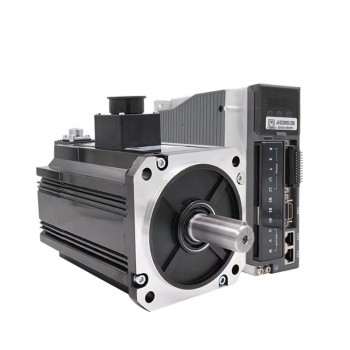
Servo motors refer to motors that control the operation of mechanical components in servo systems. They are auxiliary motor indirect speed change devices. They can convert voltage signals into torque and speed to drive the control object. The rotor speed of the servo motor is controlled by the input signal and can respond quickly. It has the characteristics of high precision, fast response and stability.
2. Classification and characteristics of servo motors
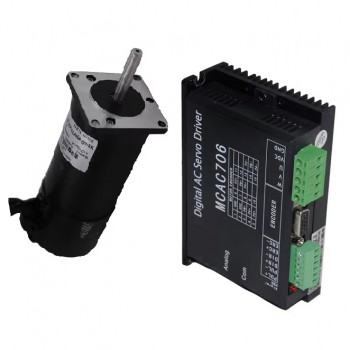
Servo motors are mainly divided into DC servo motors and AC servo motors. DC servo motors include brushed and brushless types. Brushed motors have low cost and simple structure, but require regular maintenance; brushless motors are small in size, light in weight, high in efficiency, and suitable for various environments. AC servo motors are divided into synchronous and asynchronous motors. Synchronous motors are more commonly used in motion control and have the characteristics of large power range and low-speed and stable operation.
3. Technical features of servo motors
1. High-precision control: The servo motor adopts a closed-loop control system, which can detect and feedback the position and speed information of the motor in real time. By comparing the command position and the actual position, the current and voltage are adjusted in real time to ensure that the motor can accurately position and maintain the speed, thereby achieving high-precision control.
2. Fast response: Servo motors usually adopt brushless DC motors or AC synchronous motors, which are well-designed, have high efficiency and low inertia characteristics, and can respond quickly and accurately execute control commands. For example, brushless DC servo motors are widely used in applications that require rapid acceleration and deceleration, such as robot motion control and CNC machine tools.
3. Large starting torque: Some types of servo motors, such as Siemens servo motors, have the characteristics of large starting torque, which can provide large torque at startup and are suitable for application scenarios that require high starting torque.
4. Wide speed range: Servo motors usually have a wide speed range and can maintain stable performance at different speeds. For example, DC servo motors with low speed and high torque are suitable for applications that generate large torque at low speed.
5. Various types: There are various types of servo motors, including DC servo motors, two-phase asynchronous motors, three-phase asynchronous motors, slip motors, stepper motors, torque motors, and brushless motors. Each type has its specific application scenarios and advantages.
6. Advanced control algorithms: The control circuit of the servo motor adopts advanced control algorithms, such as PID algorithm, which can accurately calculate the control parameters of the motor and achieve high-precision position and speed control. These algorithms ensure the stability and reliability of the servo motor under various complex working conditions.
4. Common applications of servo motors
1. Industrial automation: Servo motors play an important role in industrial automation and are often used in various automation equipment, such as CNC machine tools, robots, and automated production lines. They can provide high-precision position and speed control to ensure the precise operation of the equipment.
2. Robotics technology: Servo motors are widely used in robot joints and motion control. Due to their high precision and fast response characteristics, servo motors enable robots to complete complex movements and precise operation tasks, such as welding, assembly, and handling.
3. CNC machine tools: In computer numerical control machine tools, servo motors are used to control the precise movement and positioning of tools to ensure the accuracy and surface quality of machined parts. The closed-loop control system of servo motors can adjust the motor position in real time to achieve high-precision processing.
4. Packaging machinery: In the packaging industry, servo motors are used to control various actions of packaging machines, such as sealing, cutting and conveying. Its high precision and reliability make the packaging process more efficient and accurate.
5. Printing equipment: Servo motors are used in printing equipment to accurately control the position and speed of the printing head to ensure the accuracy and quality of printed products. Its closed-loop control system can adjust the position in real time, reduce errors and improve printing effects.
6. Medical equipment: In medical equipment, servo motors are used to control various precision instruments and equipment, such as surgical robots, analytical instruments, etc. Its high precision and stability ensure the accuracy and safety of medical equipment.
7. Semiconductor manufacturing equipment: In the semiconductor manufacturing process, servo motors are used to accurately control various process steps, such as wafer transfer, cutting and packaging. Its high precision and fast response characteristics ensure the quality and yield of semiconductor products.
Servo motors refer to motors that control the operation of mechanical components in servo systems. They are auxiliary motor indirect speed change devices. They can convert voltage signals into torque and speed to drive the control object. The rotor speed of the servo motor is controlled by the input signal and can respond quickly. It has the characteristics of high precision, fast response and stability.
2. Classification and characteristics of servo motors
Servo motors are mainly divided into DC servo motors and AC servo motors. DC servo motors include brushed and brushless types. Brushed motors have low cost and simple structure, but require regular maintenance; brushless motors are small in size, light in weight, high in efficiency, and suitable for various environments. AC servo motors are divided into synchronous and asynchronous motors. Synchronous motors are more commonly used in motion control and have the characteristics of large power range and low-speed and stable operation.
3. Technical features of servo motors
1. High-precision control: The servo motor adopts a closed-loop control system, which can detect and feedback the position and speed information of the motor in real time. By comparing the command position and the actual position, the current and voltage are adjusted in real time to ensure that the motor can accurately position and maintain the speed, thereby achieving high-precision control.
2. Fast response: Servo motors usually adopt brushless DC motors or AC synchronous motors, which are well-designed, have high efficiency and low inertia characteristics, and can respond quickly and accurately execute control commands. For example, brushless DC servo motors are widely used in applications that require rapid acceleration and deceleration, such as robot motion control and CNC machine tools.
3. Large starting torque: Some types of servo motors, such as Siemens servo motors, have the characteristics of large starting torque, which can provide large torque at startup and are suitable for application scenarios that require high starting torque.
4. Wide speed range: Servo motors usually have a wide speed range and can maintain stable performance at different speeds. For example, DC servo motors with low speed and high torque are suitable for applications that generate large torque at low speed.
5. Various types: There are various types of servo motors, including DC servo motors, two-phase asynchronous motors, three-phase asynchronous motors, slip motors, stepper motors, torque motors, and brushless motors. Each type has its specific application scenarios and advantages.
6. Advanced control algorithms: The control circuit of the servo motor adopts advanced control algorithms, such as PID algorithm, which can accurately calculate the control parameters of the motor and achieve high-precision position and speed control. These algorithms ensure the stability and reliability of the servo motor under various complex working conditions.
4. Common applications of servo motors
1. Industrial automation: Servo motors play an important role in industrial automation and are often used in various automation equipment, such as CNC machine tools, robots, and automated production lines. They can provide high-precision position and speed control to ensure the precise operation of the equipment.
2. Robotics technology: Servo motors are widely used in robot joints and motion control. Due to their high precision and fast response characteristics, servo motors enable robots to complete complex movements and precise operation tasks, such as welding, assembly, and handling.
3. CNC machine tools: In computer numerical control machine tools, servo motors are used to control the precise movement and positioning of tools to ensure the accuracy and surface quality of machined parts. The closed-loop control system of servo motors can adjust the motor position in real time to achieve high-precision processing.
4. Packaging machinery: In the packaging industry, servo motors are used to control various actions of packaging machines, such as sealing, cutting and conveying. Its high precision and reliability make the packaging process more efficient and accurate.
5. Printing equipment: Servo motors are used in printing equipment to accurately control the position and speed of the printing head to ensure the accuracy and quality of printed products. Its closed-loop control system can adjust the position in real time, reduce errors and improve printing effects.
6. Medical equipment: In medical equipment, servo motors are used to control various precision instruments and equipment, such as surgical robots, analytical instruments, etc. Its high precision and stability ensure the accuracy and safety of medical equipment.
7. Semiconductor manufacturing equipment: In the semiconductor manufacturing process, servo motors are used to accurately control various process steps, such as wafer transfer, cutting and packaging. Its high precision and fast response characteristics ensure the quality and yield of semiconductor products.