

Working process and working conditions of integrated servo motors
1.Simple definition of integrated servo motors
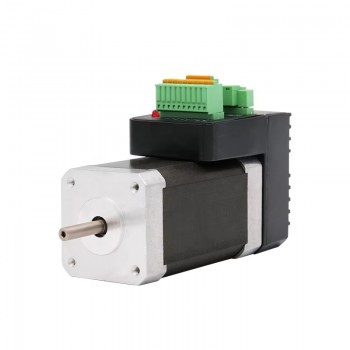
Integrated servo motors are devices that integrate motors and servo controllers. It combines the traditional separate structures of motors and servo controllers into one, greatly simplifying the system design and installation process. Integrated servo motors are widely used in the field of industrial automation and have the advantages of small size, high power density, and fast response speed.
2.Structural composition of integrated servo motors
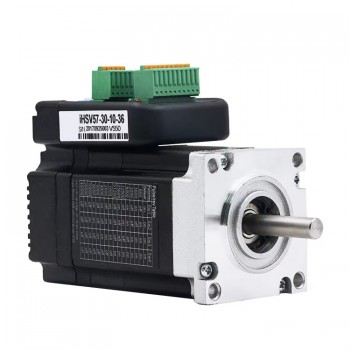
Integrated servo motors are composed of motors, servo controllers, encoders, and communication interfaces. The servo controller calculates the motor speed and position error by receiving feedback signals from the encoder, and adjusts the motor supply voltage and current according to the set control algorithm (such as PID control algorithm) to achieve precise control of the motor. In addition, integrated servo motors can also exchange data with other devices through communication interfaces. Common communication interfaces include Ethernet, CAN bus, and RS-485.
3.Working process of integrated servo motors
1.Receiving control signals: Integrated servo motors start working by receiving control signals. Control signals are usually issued by the control system to indicate the specific actions and parameters that the motor needs to perform.
2.Driver control: The received control signal will be sent to the servo driver. The driver drives the motor to rotate according to the signal requirements. At the same time, the encoder inside the integrated servo motor will monitor the position and speed of the motor in real time to form a closed-loop control.
3.Closed-loop control: The core of the integrated servo system is closed-loop control. The integrated servo motor will send out a corresponding number of pulses for each rotation angle. The control system can accurately control the rotation of the motor by comparing the pulses sent and the pulses received, thereby achieving high-precision positioning and motion control.
4.Feedback adjustment: The encoder inside the integrated servo motor will feedback the actual position and speed information of the motor to the driver. The driver compares the feedback value with the target value and adjusts the rotation angle and speed of the motor to ensure accurate control effect.
5.Execution action: After closed-loop control and feedback adjustment, the integrated servo motor can accurately execute the instructions issued by the control system and complete various complex motion control tasks.
4.Working conditions of integrated servo motors
1.Temperature requirements: The integrated servo motor needs to maintain a dry and temperature-stable working environment. In general, the working environment temperature of the integrated servo motor should be kept between 5℃ and 45℃. If this temperature range is exceeded, it is easy to cause the motor's electronic components to fail or reduce its service life. At the same time, the motor should be avoided from being exposed to high or low temperature environments, especially rapid temperature changes, such as heating or freezing.
2.Humidity requirements: The integrated servo motor needs to maintain a relative humidity of 20% to 90% when working. Exceeding this range will cause damage to the internal components of the motor, especially in a high humidity environment, which is prone to insulation failure and damage to the motor. In a high humidity environment, tools such as moisture-proof boxes or heaters are needed to protect the motor, and regular inspections are carried out to ensure that the motor is cleaned in time.
3.Vibration requirements: The integrated servo motor needs to maintain a relatively stable environment when working, and try to avoid strong vibration and shock. This is because the precise control system inside the servo motor requires a stable working environment to ensure accuracy and operating performance. If the servo motor needs to be used in a vibrating environment, reinforcement and shock reduction measures are required to ensure the normal operation of the motor.
4.Electromagnetic interference and corrosive environment requirements: Integrated servo motors also need to avoid use in strong magnetic fields, strong electric fields and corrosive environments. These environments will affect the normal operation of the motor, causing performance degradation or damage.
5.Other requirements: In addition to the above requirements, integrated servo motors also need to avoid direct sunlight and other factors that seriously affect the normal operation of the motor.
Integrated servo motors are devices that integrate motors and servo controllers. It combines the traditional separate structures of motors and servo controllers into one, greatly simplifying the system design and installation process. Integrated servo motors are widely used in the field of industrial automation and have the advantages of small size, high power density, and fast response speed.
2.Structural composition of integrated servo motors
Integrated servo motors are composed of motors, servo controllers, encoders, and communication interfaces. The servo controller calculates the motor speed and position error by receiving feedback signals from the encoder, and adjusts the motor supply voltage and current according to the set control algorithm (such as PID control algorithm) to achieve precise control of the motor. In addition, integrated servo motors can also exchange data with other devices through communication interfaces. Common communication interfaces include Ethernet, CAN bus, and RS-485.
3.Working process of integrated servo motors
1.Receiving control signals: Integrated servo motors start working by receiving control signals. Control signals are usually issued by the control system to indicate the specific actions and parameters that the motor needs to perform.
2.Driver control: The received control signal will be sent to the servo driver. The driver drives the motor to rotate according to the signal requirements. At the same time, the encoder inside the integrated servo motor will monitor the position and speed of the motor in real time to form a closed-loop control.
3.Closed-loop control: The core of the integrated servo system is closed-loop control. The integrated servo motor will send out a corresponding number of pulses for each rotation angle. The control system can accurately control the rotation of the motor by comparing the pulses sent and the pulses received, thereby achieving high-precision positioning and motion control.
4.Feedback adjustment: The encoder inside the integrated servo motor will feedback the actual position and speed information of the motor to the driver. The driver compares the feedback value with the target value and adjusts the rotation angle and speed of the motor to ensure accurate control effect.
5.Execution action: After closed-loop control and feedback adjustment, the integrated servo motor can accurately execute the instructions issued by the control system and complete various complex motion control tasks.
4.Working conditions of integrated servo motors
1.Temperature requirements: The integrated servo motor needs to maintain a dry and temperature-stable working environment. In general, the working environment temperature of the integrated servo motor should be kept between 5℃ and 45℃. If this temperature range is exceeded, it is easy to cause the motor's electronic components to fail or reduce its service life. At the same time, the motor should be avoided from being exposed to high or low temperature environments, especially rapid temperature changes, such as heating or freezing.
2.Humidity requirements: The integrated servo motor needs to maintain a relative humidity of 20% to 90% when working. Exceeding this range will cause damage to the internal components of the motor, especially in a high humidity environment, which is prone to insulation failure and damage to the motor. In a high humidity environment, tools such as moisture-proof boxes or heaters are needed to protect the motor, and regular inspections are carried out to ensure that the motor is cleaned in time.
3.Vibration requirements: The integrated servo motor needs to maintain a relatively stable environment when working, and try to avoid strong vibration and shock. This is because the precise control system inside the servo motor requires a stable working environment to ensure accuracy and operating performance. If the servo motor needs to be used in a vibrating environment, reinforcement and shock reduction measures are required to ensure the normal operation of the motor.
4.Electromagnetic interference and corrosive environment requirements: Integrated servo motors also need to avoid use in strong magnetic fields, strong electric fields and corrosive environments. These environments will affect the normal operation of the motor, causing performance degradation or damage.
5.Other requirements: In addition to the above requirements, integrated servo motors also need to avoid direct sunlight and other factors that seriously affect the normal operation of the motor.